December 2022

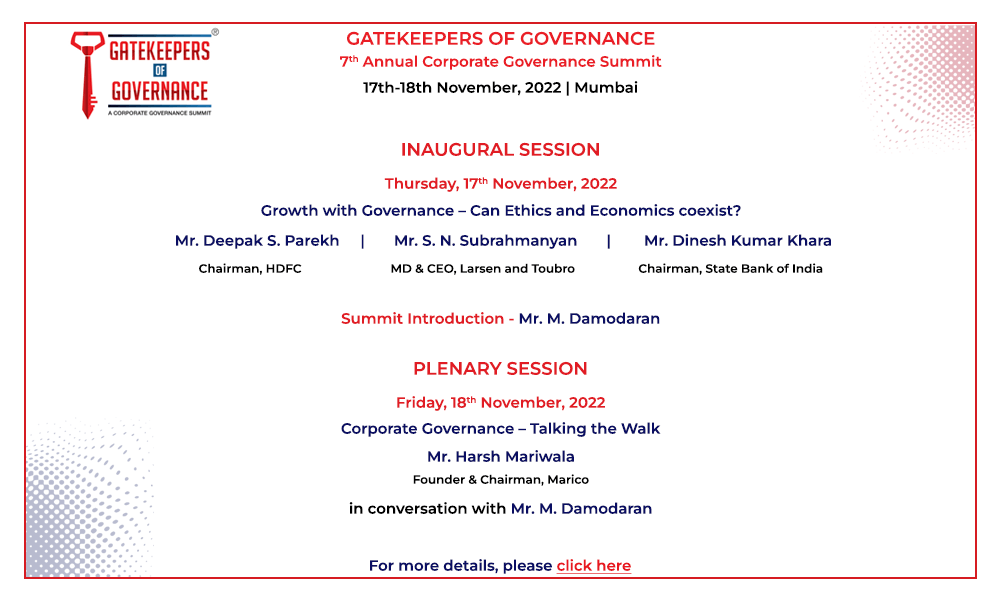
We were privileged to organise the 7th Gatekeepers of Governance Annual Corporate Governance Summit on 17-18 November 2022. A report will be published shortly.

In its latest consultation paper (there has been a steady stream of consultation papers) on review of disclosure requirements for material events or information under SEBI LODR Regulations, 2015 (LODR Regulations), SEBI has sought to comprehensively identify every possible material event or information, and to standardise the manner in which such information is to be disclosed.

Securities market regulation envisages a disclosure-based regime, which mandates that all relevant information ought to be made available to stakeholders, without delay, so that they can take informed investment decisions. The consultation paper under reference, has been triggered by the “many complaints/ references regarding inadequate/ inaccurate/ misleading/ delayed disclosures” made by listed entities.

Every such effort invites both bouquets and brickbats. Let us begin with the bouquets. This is as detailed and comprehensive an exercise as can be attempted. While making out a case for more disclosures, faster disclosures, and timely disclosures, the need for confidentiality in some matters has not been lost sight of. Further, it also takes into account the speed at which information is disseminated in this digital age, and addresses the need to reduce some timelines which were prescribed in a non-digital context. The desire of listed entities for uniformity in determining materiality of events or information has also been taken on board.

Some aspects of the consultation paper merit specific comments. They have been detailed in the following paragraphs.

Materiality threshold – In para 3.1.6, the threshold value or the expected impact in terms of value has been laid down in terms of percentages of the turnover, the net worth, or the 3 year average of absolute value of profit/ loss after tax. The lowest of these will constitute the materiality threshold. While this approach brings quantitative uniformity in regard to disclosures, it does not address the possibility that there could be an event or information below this threshold which could, by impacting the reputation of the company, be deemed material.

Materiality policy – In para 3.2.3, it has been specifically stated that the materiality policy of the listed entity shall not dilute any requirements specified under Clause (ii) of Regulation 30(4) of LODR Regulations. The next sub-paragraph states that the materiality policy shall be framed in a manner so as to assist employees in identifying a potentially material event or information, which shall be escalated and reported to the relevant Key Managerial Personnel (KMP) for determining materiality. If the employee concerned identifies a potential material event or information in terms of the thresholds, there need not be a requirement for the relevant KMP to further determine materiality, since objective criteria will form the basis for such determination.

Timeline for disclosure: In para 3.3.3, it has been proposed that for material events or information which emanate from the listed entity, the timeline for disclosure by the entity shall be reduced from 24 hours to 12 hours. This reduction of the timeline has been recommended because in the present age of digital communication, and widespread usage of social media, information gets disseminated very quickly. It is not understood how the proposed reduction from 24 hours to 12 hours will adequately address the problem. This would seem to be a recommendation in the nature of tokenism, rather than a sufficiently strong move to promote timely disclosures.

In para 3.3.4, it has been provided that events or information which emanate from a decision taken in a meeting of the Board of Directors, shall be made within 30 minutes from the closure of such meeting. Some meetings last for several hours, and the material event or information might have been decided in the early part of the meeting. Ideally, the disclosure should be within 30 minutes of the decision being taken, rather than 30 minutes from the closure of the meeting.

Verification of market rumours – This is one subject on which significant changes have been suggested. Regulation 30(11) of LODR Regulations provides that a listed entity may, on its own initiative, confirm or deny any reported event or information to the Stock Exchanges. It is now proposed that the top 250 listed entities shall “necessarily confirm or deny any event or information (emphasis supplied) reported in the mainstream media, whether in print or digital mode, which may have material effect on the listed entity.” Regrettably, many news items, in the mainstream media, neither pertain to any event, nor to any information. There are purely speculative reports, of a sensational nature, and on occasion, driven by the agenda of some person or institution, which find their way to the mainstream media. If a listed entity is to respond to all such newspaper reports, they could end up doing just that, and not transacting the business for which the entity was set up. This recommendation is clearly excessive, and should not be followed up.

Disclosure of communication from regulatory, statutory, enforcement or judicial authority – In para 3.5.2, it has been observed that some of these communications may contain confidential information, or may have regulatory restriction on disclosure. To SEBI’s credit, it has been acknowledged that companies would find it a challenge to make such disclosures upfront (emphasis supplied). What has been suggested is that a provision may be added in Regulation 30, enabling SEBI to come out with guidance for disclosure of such communications. This is more easily said than done. While companies are not expected to make upfront disclosures of such communications, there would be several different situations for deciding the appropriate time for such disclosures. It could be somewhat difficult to capture all of these in a single guidance note. While attempting a guidance note, SEBI should be mindful of the fact that premature disclosures can adversely affect a company and its stakeholders.

In events proposed to be added in Para A of Part A of Schedule III of LODR Regulations, it has been correctly acknowledged that it would be impractical to expect investors to keep track of all the announcements and communications made by the listed entity, or its officials, from time to time, and through different media fora. The fact that this could result in information asymmetry has been rightly taken note of. The solution suggested in para 3.7.2 is that all such announcements and communications should be disclosed at a single place. The logical place for disclosure of material information is the website of the Stock Exchange where the company is listed. Given the wide variety of stakeholders, and the fact that not all of them routinely access the websites of the companies and the Stock Exchanges, such disclosure itself could lead to information asymmetry. Disclosure on a Stock Exchange is like a publication in the official gazette, where there is a presumption that everyone has taken note of what has been stated in the communication. It will be interesting to ascertain what percentage of shareholders routinely access the websites of the Stock Exchanges.

One way to address the problem, and this is for companies, and not for the Regulator, is to discourage the practice of company officials, authorised and unauthorised, from making off the cuff remarks, either on their own, or in response to questions from the media. It would be useful for companies to have designated spokespersons who are trained in communicating with the media, and to ensure that only they make statements and announcements relating to the company.

In para 3.7.3, the suggested disclosure relates to developments such as suspension, imposition of fines/ penalties, settlement proceedings, debarment, disqualification, closure of operations, sanctions imposed, warning or caution, search or seizure, inspection, investigation into the affairs of the entity and reopening of accounts. The problem with indicating a long list of specific developments is that something could be missed, and therefore, by necessary implication, will not be disclosed. A better formulation, which is crisp and concise, should be attempted.

In para 3.7.5, it has been suggested that in the case of resignation of a KMP, or a Senior Management Personnel (SMP), or a Director, other than Independent Director, the letter of resignation, along with the detailed reason for resignation, shall be disclosed to the Stock Exchanges, within 7 days from the date of resignation. In a recent case, the news of the resignation of a KMP from a listed entity came out 2 days before the resignation took effect. It is not known how such possibilities, rare as they might be, will get appropriately addressed.

The consultation paper also makes a number of recommendations regarding disclosures covered under Para B of Part A of Schedule III of LODR Regulations. In Para 3.10.3, it has been noted that loan agreements for lending to wholly owned subsidiaries of the listed entity may not be material, and would usually be in the normal course of business. This amounts to giving an easy pass to companies that use subsidiaries for colourable purposes.

Disclosure of cyber security incidents – Para 3.11.2 notes that immediate disclosure of such events may not be desired since the entity may be vulnerable to further attacks. The suggestion therefore is that after root cause analysis is done, and remedial measures are taken, an appropriate disclosure should be made in the quarterly compliance report on Corporate Governance. This could give rise to the possibility that such incidents could get reported in the media, and could lead to speculation, for want of an authentic statement from the company. An appropriately worded statement, disclosed as soon as the event takes place, could be the preferable option.

Briefly stated, the consultation paper provides for a lot of additional disclosures, within a shorter timeframe, and with more details than had been mandated in the past. It is fair to ask whether corporates should contemplate setting up a separate department for disclosures with a Chief Disclosure Officer.

Sunlight is the best disinfectant, but sunburn can be harmful.

Missed the Gatekeepers of Governance Summit? Please click here to view the sessions
November 2022

There are rare occasions when Regulators have to scramble to put together arrangements to address the fallout of business having to be discontinued by a regulated entity. It is not always that Regulators have the luxury of time, to get into the normal consultative process, to determine what would work best on such rare occasions.

On October 13, 2022, SEBI addressed a communication to all concerned, indicating the steps to be taken in the event of suspension, cancellation or surrender of certificate of registration of a Credit Rating Agency (CRA). This communication was necessitated by an order passed by a Whole-time Member (WTM) of SEBI, directing the cancellation of the license of a CRA registered with SEBI. It is not the purpose of this newsletter to go into the merits of the case, and take a view on whether the irregularities that were alleged, have been established. That matter is to be decided by the Appellate Authority. Even as this newsletter gets into print, the Appellate Authority has stayed the order passed by the WTM.

SEBI’s communication under reference indicates clearly that its purpose is to facilitate orderly migration of credit ratings arising out of cancellation or suspension ordered by SEBI. The various steps to be taken by the entity concerned have been laid down in sufficient detail, and there appears to be no material omission. Similarly, the impact of the discontinuing of ratings provided by the agency, which has had its license cancelled or suspended, has been addressed. There are also directions to listed entities or issuers who have obtained credit ratings from a CRA whose registration is cancelled, suspended or surrendered.

One of the questions which refuses to go away in every case relating to punitive action taken against any entity is whether the punishment is inadequate, adequate or excessive. The credit rating business is a systemically important business. It does not matter whether, or not, the entity concerned is one of the smaller players providing that service. Therefore, while ensuring that the punishment is adequate to disincentivise any other entity from travelling down the same path, it is necessary to examine whether any penalty, other than what is proposed to be imposed, meets the requirements of public interest.

This is not the first occasion on which a CRA has been seen as not measuring up to expectations. During the financial meltdown of 2008, global CRAs were found to have, through action or inaction, contributed to the build-up, and the consequent fallout, of the serious problems in the financial ecosystem. At that time, no CRAs had their licenses cancelled or suspended.

Failures, including many for the wrong reasons, are common in the banking industry. Even in India, there have been very major banking failures, contributed to in significant measure, by promoters or persons incharge of management. On such occasions, the banking Regulator sometimes appoints to the Board of that regulated entity, one or more Directors, to ensure that business is conducted in an orderly manner, and that the shortcuts resorted to in the past, remain a matter of the past. The question that therefore needs to be addressed is whether in the event of failure of a rating agency, the Regulator could have appointed two persons to the Board, and if necessary, to the management positions, and effectively neutralised the promoters, who were in management positions. Yet another possibility, in grave circumstances, is the suspension of the license of that entity. This would have serious consequences for the clientele, since in addition to the entity not being able to take on new business, its ability to service the existing business would also be disrupted. The advantage of suspension, when compared with cancellation, is that the entity survives, and can be rebuilt on healthy lines with a new management in place. Yet another possibility is the merger of the defaulting entity with a larger healthier entity in the same line of business. This would ensure that the customers are not left high and dry for no fault of theirs. Migration, no matter how carefully it is planned and implemented, will have within it, at least temporarily, some elements of disruption, which will adversely impact the customers.

Credit rating is a serious business. If the faith of the financial ecosystem is undermined by alleged irregular practices by a rating agency, and the consequent termination of its license, it will not bode well for the future. There would also be questions asked, at least in private conversations, whether the other rating agencies can be counted on to provide completely reliable services. It may be recalled that when Satyam Computers went under, there were questions in the minds of some persons as to whether other IT companies also had issues of this nature. The reputational impact is therefore not only on the entity which has had its license cancelled, but also on other entities, especially those which, not so long ago, had fairly serious brushes with regulatory agencies, and saw the exits of their Chief Executive Officers. There is an expectation among some persons that this action taken against one of the rating agencies could lead to the practice of shopping for ratings by issuers being discontinued. This can, at best, be a fond hope, rather than a legitimate expectation.

As already indicated, the matter is before the Appellate Authority. There will be findings on whether SEBI’s order seeking to establish multiple irregularities, survives appellate scrutiny. It is expected that notwithstanding the merits of the allegations which have been established by SEBI’s order, the appropriateness of the penalty in such cases would also be addressed, not necessarily from the point of view of the promoter, but keeping in mind the public interest, including the need to minimise disruption, and ensure that the blameless customers do not end up paying a price however small or temporary.

October 2022

Transparency and disclosure are the twin pillars on which the edifice of Corporate Governance is built. While transparency is the objective which is sought to be achieved, disclosure is the instrumentality. Underpinning transparency and disclosure is the element of communication. Stakeholder democracy, which is the ultimate objective that Corporate Governance seeks to achieve, necessitates that information asymmetry does not vitiate the atmosphere of governance. It stands to reason that communication that is correct, clear and complete, is a non-negotiable requirement in ensuring a level playing field.

For communication to be effective, it is necessary that the person(s) for whom the communication is intended understands it in the same manner as the person originating the communication. In the Law of Contract this is referred to as Consensus ad idem. If both parties to the communication do not understand the content of communication in the same manner, the effect would often be worse than non-communication.

Perpetrators, willing or otherwise, of the practice of miscommunication, are far too many and varied. Often it is the result of complexity in language, and lack of clarity in content. In the recent past, the Supreme Court of India has commented adversely on three judgements on by one of the High Courts, stating that the language in which the judgements was written could not be understood even by the Judges of the Supreme Court. Hopefully, the message has gone across to al the Courts in the land, whether High Courts, or Subordinate Courts, so that the common man, who cannot plead ignorance of law as an excuse, is enabled to understand what the law is.

Some years ago, there were also some observations, not necessarily complimentary, on the number of words that were used in a single sentence by a Judge of the highest Court. This is not a new phenomenon. There have been cases over the years in which the authors of judgements have proceeded on a literary journey, leaving a lay reader behind, struggling to keep pace with what was being said.

Lawmakers are not free from this exercise in verbosity. The simple fact that the longer the sentence, the more difficult it is to comprehend in the first instance, seems to have been lost sight of by persons who ought to know better. One example will suffice to illustrate the position. Section 447 of the Companies Act, 2013 provides for the punishment for fraud. Interestingly, the punishment has been provided for without initially explaining or defining the offence of fraud.

The first explanation to the section defines fraud in the following manner – “”fraud” in relation to the affairs of a company or any body corporate, includes any act, omission, concealment of any fact or abuse of position committed by any person or any other person with the connivance in any manner, with intent to deceive, to gain undue advantage from, or to injure the interests of, the company or its shareholders or its creditors or any other persons, whether or not there in any wrongful gain or wrongful loss”. Even a person contemplating the commission of fraud would be disincentivised if he/she read this explanation, with its various twists and turns. It is not clear whether this complex definition found its way to the statute to discourage potential perpetrators of fraud.

Regulators are not to be left behind in this endeavour of communicating in an unclear fashion, and also sacrificing syntax in the process. One of the items which needs to be disclosed by a corporate entity is “changes in accounting policy, if any”. The fact that, by implication, this would permit a situation where a company does not have an accounting policy, has clearly escaped notice. The words, “changes, if any, in accounting policy” were presumably what was intended.

Sometimes purety of language stands in the way of proper communication. In the olden days, referring to the Hindi news bulletins in All India Radio, some wags used to say “samachar main Hindi suniye”, instead of “Hindi main samachar suniye”. The textbook Hindi that was trotted out was clearly not the best way to get the information across.

An even more interesting example, which this writer witnessed first hand, was when the seniormost functionary of a state administration was addressing a group of villagers outside a block development office. Being a purist when it came to matters of language, he used the words “samasti unnayan kendra” quite a few times in his address. Two old, and presumably not very literate persons, were sitting at the back of the audience, and one of them asked the other, what the reference was to. The other disarmingly mentioned that the speaker was referring to the block office, whereupon the first of them said “Why does he not say so, because that is something all of us understand”.

A recent development should be heartwarming for those who have struggled with the disquieting awareness that language was given to man to conceal his thoughts, and not to communicate. A Bill has been introduced in the New Zealand Parliament, seeking to provide that all laws and administrative orders should be written in simple language. Jargon is sought to be shown the door. This is an exercise that should be embraced by all jurisdictions across the globe.

Securities law requires that matters that are required to be known to all stakeholders should be communicated to the Stock Exchanges on which the companies are listed. Some of those disclosures are written in a manner that clearly indicates that the intention of the company concerned was not to make the stakeholders any wiser with regard to that development. There are not many better examples of ticking the box, and moving on with life.

Communication is indicative of the true intent and purpose of the person seeking to communicate. It will be evident from the communication itself whether the intent of the communicator was to share information, or to string together a number of words, which did not render the reader any the wiser.

Alongside simplicity, brevity is an essential element of communication. There are several examples. One instance is of a note recorded by a distinguished Chief Minister of a State in the past. When he was particularly infuriated by the content of a note that was put up to him, he dismissed it with one word “Nonsense”. When the officer who authored the note went up to him and protested, the venerable Chief Minister apologised and said that he would write it out in a full sentence, “the note does not make any sense”. Nothing further needed to be said. Clarity is a timeless virtue. At the same time, obfuscation is a fine art. It should not be practiced on the unsuspecting stakeholders of any system.

Wise men speak because they have something to say; fools because they have to say something” – Plato

September 2022

A few months after the financial meltdown of 2008, a football match between Manchester United and Newcastle United took place in England. As matches go, the quality of the game was nothing much to write home about. What was significant was that Manchester United had the logo of AIG, and Newcastle United had the logo of Northern Rock. Weeks earlier, AIG had effectively come under the US Government control, and Northern Rock was taken over by the UK Government, following its difficult financial circumstances. As one wag observed, this was an international match between the USA and England, going by the sponsor logos on the shirtfronts. It mattered little to many people that the problems of these two sponsor institutions had led to many people losing their shirt.

One was reminded of this story in the context of the now-on-now-off discussions regarding public sector ownership of banks. Those who fly the flag of privatisation, continue to believe that it is the answer to all problems that the economy faces from time to time. At the other end of the spectrum, there are those that believe that public ownership of banks is a continuing necessity, especially in an economy with wide disparities, and an extremely heterogenous set of consumers.

For a couple of months, the subject of privatisation of banks appeared to have been put on the backburner. Then an article, co-authored by Herwadkar, Goel and Bansal, all from the Reserve Bank of India (RBI), made out a case for a phased privatisation of public sector banks (PSBs) as a more desirable option, than rushing into depriving Government of its ownership in all PSBs. Given that the Government had, from time to time, been making statements about succeeding rounds of privatisation of all PSBs (except State Bank of India), this article seemed to be going against the grain, coming as it did from three researchers of the Central Bank. Sufficient hackles must have been raised for the Central Bank to come out with a communication titled “RBI clarification” on August 19, 2022, reiterating that the alternate perspective propounded by the three researchers was, as already stated, their view, and did not represent the views of the RBI.

Now that the possibility of a conflict between the Government and the RBI, on this account, has been laid to rest, it is time to look at the substantive issue involved. In a climate in which reform and privatisation are erroneously treated as synonyms, it must have taken some courage to canvass the proposition that rushing into privatisation is not what the banking sector requires at present.

Before getting into the relative demerits and merits of Government ownership of PSBs in India, it is necessary to take note of the fact that post the financial meltdown, many developed countries nationalised some stressed banks, and some infused enormous amounts of capital to meet bank-specific needs. It became abundantly clear that public ownership of banks was nowhere near its sunset.

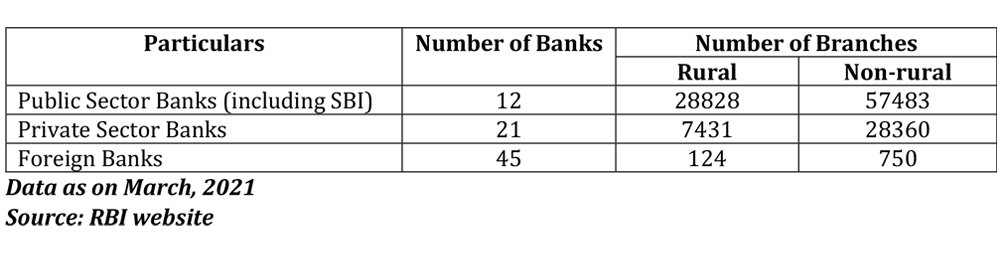
Following a few mergers, the number of PSBs in India has significantly reduced. More importantly, the remaining PSBs have acquired a scale and a size which ensures that they are no longer pushovers in this sector. With close attention, and with institutions to which they could transfer their stressed assets, the remaining PSBs have significantly cleaned up their books, and are in a position to better meet the banking needs of their diversified clientele.

Consequent on the nationalisation of banks in 1969 and in 1980, banking facilities have been taken to areas, and to people who had no access to them. This act of inclusiveness has helped to foster a sense of belonging, as well as to empower those who had hitherto been denied banking services, to ask for products and services that they did not even know existed. In this aspirational endeavour, the private sector banks have had little, or no role. Most of the large number of new bank accounts that have been opened in the last few years, have been opened by PSBs. With their stipulations of minimum balances, which prima facie seem unreasonable, private sector banks have stayed out of this area of activity. When it comes to sectoral interventions such as agricultural credit, there is comparatively insignificant contribution from private sector banks. Further, as the article under reference conclusively establishes, the mandated priority sector lending targets have been met by private sector banks by acquiring assets from NBFCs and other entities. The degree of involvement in assessing credit needs, interacting with borrowers, ensuring timely access to inputs, and supporting the marketing efforts, have not been concerns that have unduly bothered the private sector banks.

There are economists, especially those residing outside India, including some with a text book knowledge of so-called Indian ground realities, who believe that the PSBs are inefficient, and therefore have no right to exist. They see this through the lens of profit maximisation, consistent with the Milton Friedman model that shareholders should be looked after, and other stakeholders can fend for themselves. Efficiency should also be seen in context. The PSBs came into existence long years before the internet, and therefore they have significant brick and mortar presence spread throughout India. The private sector banks, that came in subsequently, do not have this burden from the past. Further it is well recognised that efficiency is not a function of ownership. Therefore, to subscribe to the view that public sector ownership will necessarily translate to inefficiency and suboptimal performance is an erroneous conclusion. Banking is also an expression of confidence. Subsequent to the 2008 crisis, many depositors sought comfort in the Government ownership of PSBs, and did not wish to expose themselves to the uncertainties that a challenged private sector bank could bring into their lives. Also, every conceivable poverty alleviation scheme, with a credit input, has been significantly contributed to by PSBs.

When the then largest private sector bank was experiencing a run, it was to the State Bank of India that it reached out for help. Even at the risk of exaggeration, it should be pointed out that individual acts of greed and misdemeanour have brought some private sector banks, both big and small, to their knees. On the other hand, many of the problems that PSBs face are a result of the prodding by the Government to lend to infrastructure projects, as well as on account of judicial decisions that have, in spite of good intentions, transformed seemingly creditworthy risks into completely unacceptable propositions. Private sector banks have had a much lesser problem on account of these externalities.

India, it hardly needs to be said, is as heterogenous as a country can get. There is every conceivable divide that separates some segments of the population from some others. In such a situation, to have only private sector banks, with profit maximisation and increase in market cap as the guideposts, is a sure recipe for disaster. PSBs must not only be allowed to remain in existence, but should be strengthened, and encouraged to play a legitimate role that less advantaged sections of society need the banks to perform. PSB leadership, as we have argued earlier, should be sufficiently empowered and incentivised to provide the kind of leadership that large organisations require, especially when there is a significant public responsibility to be discharged. Tying them hand and foot, and expecting them to compete, is worse than comparing apples with oranges. PSBs must have Boards that lead, and not Boards that are led. Periodic discussions on privatisation of PSBs, accompanied by trashing them in public fora, has an avoidable negative impact on the morale of the workforce.

Private sector banks have a legitimate role in a growing economy. However, they should supplement, and not supplant, PSBs.

In good times there can be academic debates on whether privatisation is the panacea for all ills. But as we have seen, in bad times, it is to PSBs that the less affluent flock, in search of safety and security.

Dukh me sumiran sab kare, sukh me kare na koi,
Jo sukh main sumiran kare, Dukh kahe ko hoye. (Kabir)

Tailpiece: Responding to a query on high charges by a member of the RBI’s Taskforce on Customer Service a decade or so ago, a legendary private sector bank chieftain said “You cannot get 5-star food at Udupi hotel rates.” He did not perhaps know that, more often than not, Udupi hotels serve better food. Some food for thought.

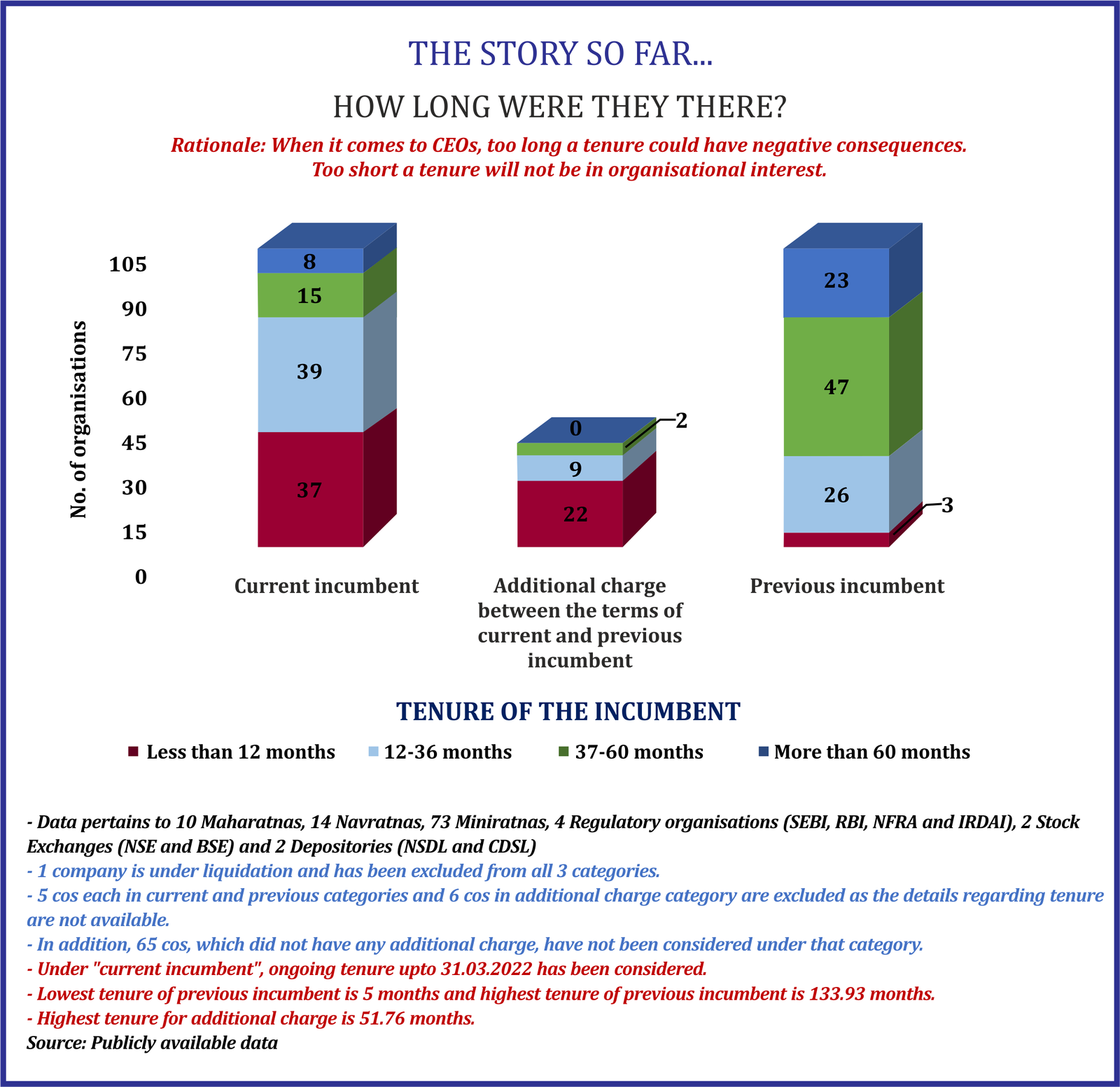
THE STORY SO FAR…

Our comprehensive report on ‘India Inc’s Preparedness For BRSR’ is out now. To read the full report, please click here.

August 2022

The long journey towards responsible corporate citizenship has seen many twists and turns. To begin with, there was extensive discussion and debate on whether corporates were expected to look after the interests of only shareholders, or whether there was a wider constituency outside that also needed to have its interests taken note of, and addressed. Milton Friedman of the Chicago School was the high priest of the philosophy which advocated that only shareholders needed to be taken care of. This limited perspective yielded ground over time, and today, across geographies and jurisdictions, it has been accepted that the interests of all stakeholders need to be kept in mind by corporate entities.

This expectation has not automatically translated to understanding the needs of other stakeholders, and capturing them in the decision-making process. The limited initial efforts confined themselves to redressing grievances that were brought to the notice of the corporates, but did not extend to proactively identifying stakeholder needs, and moving in the direction of putting in place the right practices.

In India, the journey has been on predictable lines. Following the coming into effect of the Cadbury Committee on Corporate Governance, India too saw several committees being set up, with several recommendations emanating from their reports, as to the steps to be taken to improve Corporate Governance. The G pillar in ESG (Environmental, Social and Governance) has been the subject matter of discussion and debate for far more than the E and S pillars have been. The recognition that society as a stakeholder was an important constituent that the corporates need to engage with productively, had a later origin. Long before laws and regulations provided for Corporate Social Responsibility, Jamshetji Tata had captured the spirit of this intervention by providing for the sustainable development of Jamshedpur city and its neighbourhood. Without any law or regulation pointing in that direction, an impact assessment of various initiatives was undertaken in Jamshedpur.

Early moves towards nudging corporates in the direction of responsible citizenship took the form of voluntary guidelines, which enumerated the positive aspects of what corporates needed to do to address stakeholder interests. The Companies Act, 2013, for the first time, provided that 2% of the average net profits for the previous 3 years, should be spent on schemes and programmes, as also thrust areas, that would benefit the community. In the only instance of its kind in the statute, the “comply or explain” principle from the United Kingdom was imported. Over the years, “comply or explain” has moved towards “comply”, with, no excuses, masquerading as explanations, being acceptable. Doing good changed from being an affair of the heart being in the right place, to a set of accounting entries.

Acts of God, and Acts of State, often prompt Governments and other authorities to take contextually correct decisions. Covid-19, and its devastating effect on the workforce, forced corporates to take a close and hard look at the needs of the workforce in the parent companies, and in some cases, in the associate and subsidiary companies, as also the entities in the supply chain. Physical and mental health became areas that companies increasingly focused on, and to good effect. For the first time, Covid-19, an Act of God (unless one wants to credit the Chinese with this development) brought increasing focus on the S pillar of ESG.

The E pillar of ESG, representing the environment, was for long, the subject of animated conversations, without corresponding conviction or corporate commitment. Some perfunctory steps, representing low hanging fruit, were touted by corporates as major accomplishments in the environment space. There was recognition that the present generation owed it to the subsequent generations to leave the planet in at least as good a condition as they found it. However, mindless industrial expansion, leading to adverse impact on the environment, took their toll in most geographies. This led to calls for conservation of water, reduction in carbon footprint, replacement of fossil fuels with renewable energy sources, and the like. The Business Responsibility Report (BRR) which was SEBI’s first initiative in this space, pointed corporates in the direction of reporting on what they had been doing to conduct business responsibly. It also served the purpose of holding a mirror to the corporates on what they had not been doing, and should commence doing, within a short while. The lack of adequate quantification was a major setback, and creative corporates used language to cover up for non-performance. The Business Responsibility and Sustainability Reporting (BRSR), which has been introduced, and will take effect in the current year, is a significant improvement, not merely because it is more comprehensive, but also because it calls for a higher degree of quantification of achievements in regard to most parameters. Significantly, it introduces “sustainability” as an element which needs to be centre stage in all that corporates do in this sphere.

With ESG now occupying significant mindspace, and being projected as the one comprehensive element which would set apart good corporates from bad corporates, there has been the expected pushback from some quarters. It takes one back to the time when Corporate Governance was initially being actively canvassed. Many persons, academics included, argued that Corporate Governance did not add to the strength or the performance of any company. In fact, some of them went to the extent of calling it an avoidable distraction, which could deflect managements from the straight and narrow path of profit maximation and enhancement of market share. It took several Corporate Governance failures across jurisdictions, for the acceptance of the fact that, other things remaining the same, a well governed company would be better off in the long run. The concept of “governance premium” gained ground slowly, but surely.

Fast forward to present times, and we have critics saying that ESG is a fad that will deliver no value. One distinguished economist of global renown has described it as a “feel good scam”. Only time will tell whether such descriptions are themselves sustainable. The argument that investments premised on ESG will over time deliver comparatively suboptimal returns is neither here nor there. There ought to be a balance between doing good for society and doing good to shareholders. Leaving society out of corporate consideration is almost certain to be the last nail on the coffin of sustainability.

Comrade Putin’s adventures (or misadventures, depending on which side of the political divide one is) have administered a significant body blow to the E element of ESG. European nations, which were in the forefront of the campaign for stepping up ESG practices, have now, in acts of self-preservation, gone back in a big way to fossil fuels to address present needs, ignoring the impact on the future. This too has prompted the naysayers to pronounce that the “ESG fad”, as they describe it, will disappear even before Putin makes his last moves on the political chessboard. If Covid-19 was an Act of God that prompted focus on the S pillar of ESG, the Act of the Russian State has had the consequence (hopefully unintended) of detracting from efforts relating to the E pillar of ESG.

What should Indian corporates do? The BRSR which comes into being this year, is, all things considered, a report. It is important for corporates to take necessary steps that will help to populate the report in a positive and a productive manner. The application of western standards, principles and parameters, in mindless fashion, could be problematic. It is necessary to ensure that there is no disconnect between Indian ground realities and the ESG framework that Indian corporates are tasked to conform to. More than ever before, there is the need to capture what is relevant to Indian conditions, without legitimising the irregular practices that have added up to some of Indian reality. Looking at the needs of various stakeholders through an Indian lens, and putting in place the relevant parameters under each of the 3 pillars E, S and G, would be a step in the right direction.

To ensure that corporates are moving in the right direction, and at the right pace, the Board needs to ask a few questions. Firstly, what steps have been taken, or are proposed to be taken, to help with the preservation of the planet? Secondly, have the efforts remained confined to making financial provisions, without thinking through the manner of implementation? Thirdly, having started on some ESG initiatives, has any impact analysis been undertaken to decide whether any changes are needed in programme content or in the manner of implementation? Fourthly, is the company’s workforce involved in these initiatives? Involvement should be more than merely volunteering for identified activities, and should extend to generation of relevant ideas and suggestions. Finally, since corporates implement some of these programmes through implementation partners, are these partners spending the funds in a manner consistent with the objectives of this initiative?

If we are to leave the planet in at least as good a condition as which we found it, ESG, notwithstanding its initial shortcomings in practice, needs to be kept centrestage of the corporate thought process. The equivalent of the Regulatory Impact Assessment should be considered. Every action that goes into the productive process should be preceded with the question on what harm, if any, it could cause to the environment. This is, without argument, a herculean challenge. It is time for corporates to recognise that the road towards good corporate citizenship is not a path of roses. However, the rewards of travelling on the thorny path, and doing good deeds on the way, can be more rewarding than most entries in the financial statements. The way to Hell may be paved with good intentions. Equally, if not more, the way to Heaven could be paved with good intentions given effect to by good practices, founded on good principles.

THE STORY SO FAR…

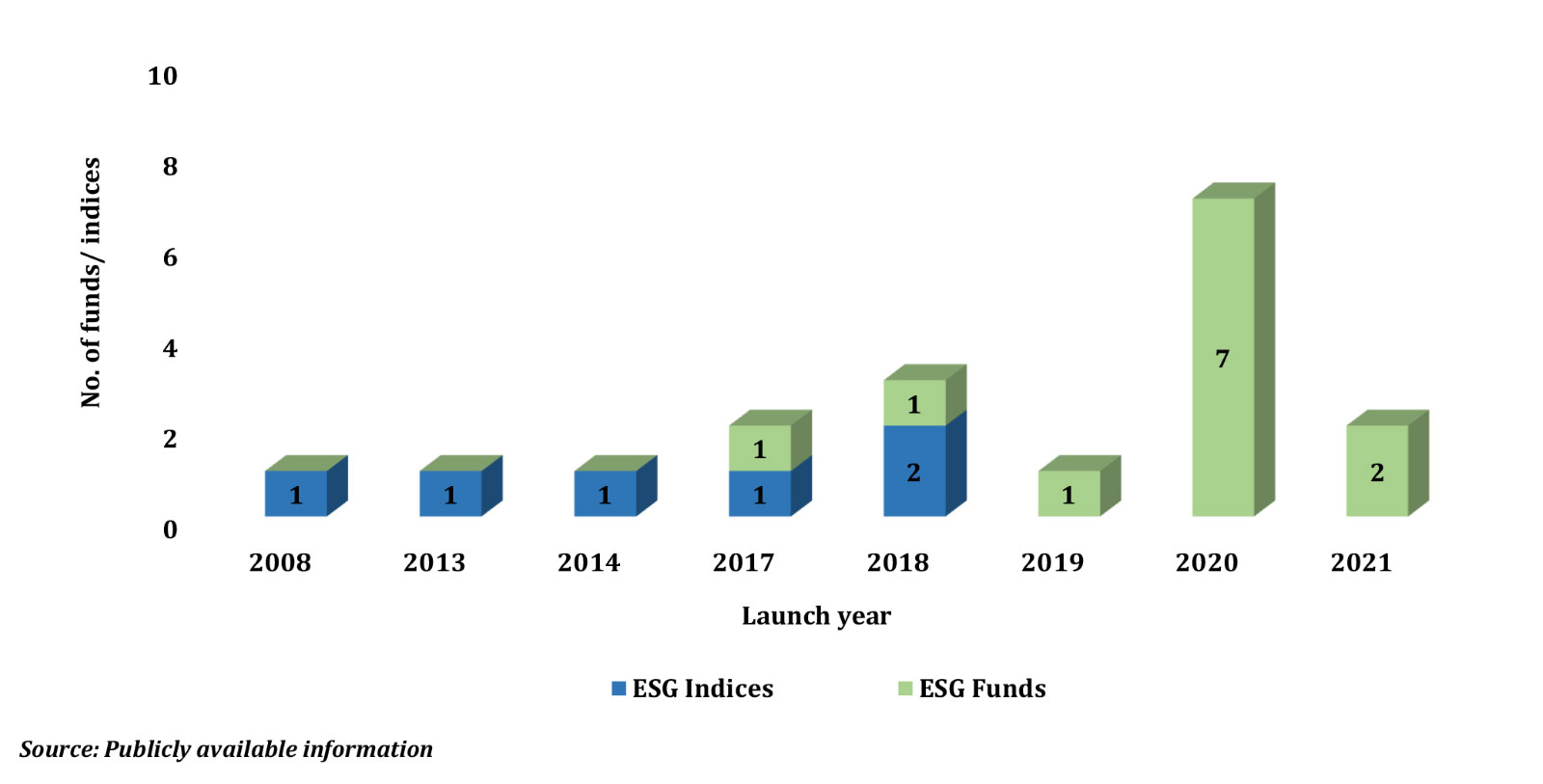
ESG Funds and ESG Indices in India

To read our views on SEBI’s consultation paper on including Mutual Fund units in SEBI PIT Regulations, 2015, please click here.

Our comprehensive report on ‘Tracing The Missing Shareholders’ is out now. To read the full report, please click here.

July 2022

Recent meetings of the Audit Committees (ACs) of several corporate Boards have devoted considerable manhours to agonising over the manner in which they will measure up to the expectations arising out of the tightened regulations relating to Related Party Transactions (RPTs). To understand the nature and the dimensions of the problem, it is necessary to briefly touch on some of the prescriptive arrangements that have been put in place.

Even prior to the recent tightening of the regulations, ACs, more often than not, went through the motion of approving RPTs, without being entirely satisfied that all the approvals were based on evidence, analysis and judgement. At a superficial level, the only two aspects to be examined are whether the transaction in question is in the ordinary course of business, and is at arms length. In the case of a large number of transactions, the first criterion was easily established since these were transactions identical, except perhaps in volume and price, to transactions that had been approved earlier. On occasion, when a new type of transaction was presented to the AC, the level of scrutiny was a little more intense.

The more problematic element of the approval process was the determination whether a transaction was priced at arms length. Here again, the theory is sound, and cannot be questioned. All that it requires is for the AC to examine whether the pricing of the transaction between the 2 related parties would have been the same had they been unrelated parties. In practice, several other considerations emerge. In a large number of cases, one of the 2 related parties has been providing goods or services to the other related party for many years. Should a competitor suddenly surface, and offer a better price, it is necessary for the management, and for the AC, to exercise judgement on whether the new (unrelated) party can ensure the supply of goods and services in a non-disruptive manner, and whether the quality considerations that should inform the selection process are in place.

Notwithstanding all the adverse notice that RPTs have attracted from time to time, it is necessary to recognise that these transactions are not illegal. If the intention was to completely phase out RPTs, the law and the regulations would have had express provisions to that effect. Fortunately, neither lawmakers, nor Regulators, have travelled down that path, since the element of disruption that it would give rise to, in the normal conduct of business, would be very high.

At the same time, it is recognised that RPTs need to be subjected to scrutiny, because, in the absence of scrutiny, conflict of interest can, and will, rear its ugly head. Off the record conversations with members of the AC will reveal that this item comes up for discussion, and decision, towards the tail end of AC meetings, when the normal tendency is to take the agenda note as read, and accord approval. Occasionally, the minutes of the meeting would read as confessional statements (unintended), since they would state in as many words that the management had certified that the transactions were in the ordinary course of business, and at arms length, and approvals would be accorded on that basis.

All regulations present opportunities to the mischievously inclined, to find loopholes therein, or to entirely skirt the procedural requirements, leading to approval. With evidence of this kind surfacing in the recent past, the Regulator has taken upon itself the unpleasant task of further tightening the prescriptive arrangements, making unconscionable conduct by management and in ACs far less practicable.

To begin with, the definition of related parties has been significantly enlarged. While for reasons of space, it is not proposed to detail all the additions, it is necessary to point out that with the expanded definition, it has become difficult for managements, and for ACs, to keep track of not only the transactions, but also the entirety of related parties. What is worse, the regulations presently provide that even transactions in which the concerned corporate entity is not a party, would have to be approved by the AC, if it is between a subsidiary and one of the related parties. The presumption that adequate knowledge and bandwidth would reside in the AC, to keep track of all these transactions, and to approve them on merits, is indeed a very big ask.

It is readily conceded that if RPTs that are not bona fide are enabled to be put in place, the minority shareholders would be the ones to suffer. To address this, regulations now provide for the approval by shareholders of more categories of transactions.

One of the major pain points which has got corporate entities, especially the larger entities, up in arms, is the requirement that RPTs exceeding a value of Rs 1000 crores would, of necessity, have to be taken to the shareholders for approval. Large corporates have complained that this ceiling of Rs 1000 crores would not make sense in their cases, since it would represent a very small percentage of the annual consolidated turnover of the listed entity. The alternative suggested is to prescribe only in percentages, and not in absolute numbers, so that neither the larger corporates, nor the smaller corporates, suffer from the lack of a level playing field.

Ever since the question of approval of RPTs by the AC came into being in the Companies Act, 2013, the question has been raised whether approval of transactions, as distinct from audit of transactions, should be within the remit of the AC. Since no alternative could be easily identified, and it would have been next to impossible to take all such transactions to the shareholders for approval, the AC has remained the authority for clearing these transactions. The new element in the regulations is that all these transactions need to be approved by only the Independent Directors (IDs) in the AC. Across the board, the view generally expressed is that IDs, notwithstanding their intelligence and industriousness, are part-time functionaries, who will not have all the information and expertise required to accord approval. To get around this, some have suggested that all such transactions could be got vetted by an outside expert agency, so as to give comfort to the IDs that they are on the right course, when it comes to approving these transactions. This facile suggestion does not address the question whether law envisages the outsourcing of thought process on a continuous basis to an external agency which has no fiduciary responsibility qua the company or its shareholders.

To make matters procedurally cumbersome, the regulations now stipulate all the aspects that an AC should go into before it accords approval to these transactions. If any AC seriously looks at all these aspects in respect of all RPTs, it is reasonable to presume that meetings of AC would last several days. One outcome could be that it would be difficult to find members for the AC, since Directors will not be able to commit the time required for such detailed scrutiny lasting several days.

The regulatory stance proceeds, not surprisingly, on the distrust of the management, the Board, and also the AC. It is therefore provided that in regard to some categories of transactions, the prior approval of shareholders should be sought. The fact is that the average shareholder is not interested in matters of this nature being taken to him/her for approval. It also places a premium on their ability to create the time to understand these proposals, as also the expertise that is required for the purpose. Institutional investors are better placed when it comes to the ability to apply their mind to these transactions, should they choose to do so. However, the behaviour pattern of institutional investors has demonstrated that almost without exception, they rely on the recommendations of proxy advisory firms. Shorn of all details, the resultant situation is that the views of the proxy advisory firms would override the decisions of the AC and the Board. This clearly is an unacceptable proposition.

The well-intentioned regulations also have some unintended consequences. For example, an overseas subsidiary transacting with a related party would have to get the transaction approved by the AC of the India-based parent company. In matters of taxation, a question could arise on whether India or the overseas location of the subsidiary company is the place of effective management (POEM). With RPT approvals required to be accorded from India, an assessing authority could well contend, in spite of the presence of a Board in the overseas location, that decisions are being taken in India, and therefore the benefit of an overseas location in taxation matters would not be available. These are matters which should be addressed sooner rather than later.

Regulations should normally be free from the possibility of constructive or creative interpretation. RPTs will, from April 1, 2023, include transactions between “a listed entity or any of its subsidiaries on one hand, and any other person or entity on the other hand, the purpose and effect of which is to benefit a related party of the listed entity or any of its subsidiaries”. In this context, attention needs to be paid to words such as “the purpose and effect of which is to benefit a related party….”. While the stated purpose would be evident from the nature of the transaction, any hidden purpose that resides in the minds of those putting through the transaction would not be known to the members of the AC. Not being mind readers, the members of the AC could clear proposals, which later reveal a divergence between the stated purpose, and the actual purpose. This could expose them to the unfavourable attention of agencies that come in with the wisdom of hindsight.

There is yet another possible negative fallout of the new regulations. The auditing profession, which is now at the receiving end of increasingly adverse orders, could raise questions on the genuineness of the purpose and effect of the transaction. Self-preservation is not a behavioural aspect unknown to any profession. If their judgement is being challenged, as is being increasingly done now, it is not unlikely that in order to prevent future challenges, they could point to the problematic nature, imaginary or real, in some of these transactions.

It is useful to embrace an excellent tool that has often been talked about, but never implemented. The reference is to regulatory impact assessment. The nature of the new RPT regulations cry out for regulatory impact assessment being undertaken. Absent this, the ease of doing business, which is a professed aim, could suffer serious setbacks.

What then does the future hold for the corporates? Regulations being non-negotiable, and not a matter of choice, have to be complied with. Therefore, while implementing the new regulations, corporates must continue to engage with the Regulator on the need for pragmatism, without sacrificing principles. As for the Regulator, there must be the realisation that tweaking regulations to factor in practical difficulties will bode well for the regulated universe that they purport to preserve, protect and promote.

Our comprehensive report on
‘Making AGMs More Meaningful’ is out now. To read the full report, please click here.

June, 2022

In the aftermath of the global pandemic, many countries have been grappling with a relatively new problem that the western world has christened “The Great Resignation”. With the comfort of working, or not working, out of homes, and of being away from the pressure cooker situations that the office environment sometimes resembles, a number of persons have opted out of the formal system.

Two years down the line, corporate India will witness its own version of “The Great Exodus”. Familiar faces will no longer be visible in the boardroom. A large number of persons, answering to the description of Independent Directors (IDs), will be vacating their positions on the Boards. This major change will be occasioned in most cases by the second of the 2 five year terms coming to an end, and in the case of those who would have completed only one term, discovering that there is much more safety remaining outside boardrooms.

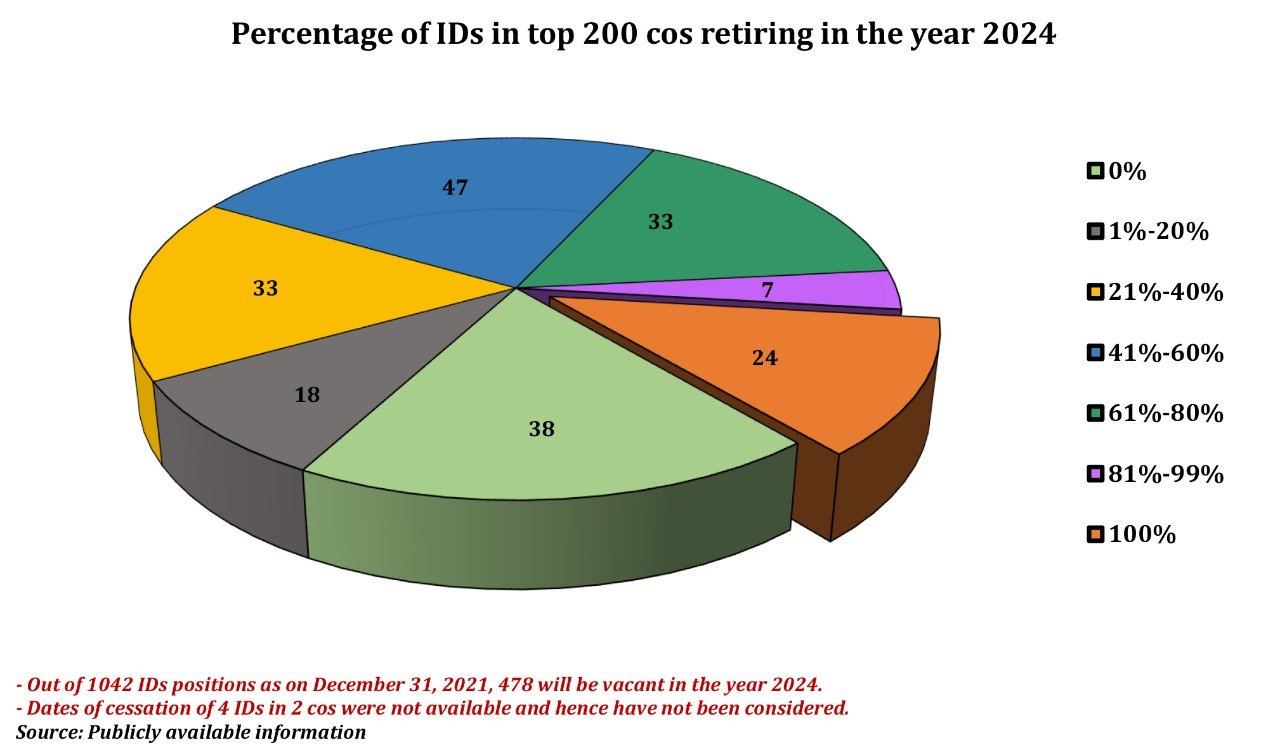
A recent study undertaken by Excellence Enablers shows that around this time, 2 years from now, nearly 500 positions of IDs in the top 200 companies will fall vacant. Given the lead time that would be taken to identify an adequate number of potential IDs, and the consequent process to appoint them on Boards, it is necessary for corporates to immediately give thought to the kind of persons that they would like to have on their Boards 2 years from now, if not earlier. Also, if the transformation is to be non-disruptive, some of the new persons could be brought on Board, before the vacancies arise, so as to ensure continuity with change.

It is abundantly clear, that the responsibility associated with Boards necessitates the appointment of Directors, who will add considerable value. It should not be seen as a mere filling up of vacancies merely because nature and regulations abhor a vacuum. It is for the Nomination and Remuneration Committees (NRCs) to set the ball rolling. The first mistake to be avoided is to attempt a like-for-like replacement, because it is entirely possible that skillsets and insights which were relevant 10 years ago, while continuing to be relevant, might not be the most important parameters for determining the suitability of a contextually relevant candidate. Over 10 years, many businesses have reinvented themselves, and many corporates have got into newer lines of business while either scaling down, or abandoning older lines of business. Skillsets that have contemporary and future relevance should determine which of the potential candidates will make the cut when it comes to directorship. A perusal of the tabular statements, in Annual Reports, indicating the skillsets associated with the present members of the Board, would seem to indicate that most of them have every conceivable skill known to humankind. A more honest assessment of existing skills is an exercise to be undertaken parallelly with the identification of newer skills that are relevant for the future. NRCs must remember that they are helping to build the Boards of the future, and for the future, and should therefore be forward-looking in their thought process.

Where will the NRCs source such a large number of persons who are able and willing? It is useful to look at what they should not end up doing. The easiest, and the most avoidable course, is to access the database maintained by an institution for whom the recently introduced examinations, and the maintenance of a database, have become dependable revenue streams. Experience, since the databank has come into existence, has shown that most companies do not seriously look at it, when identifying potential Directors.

The second option which, if implemented, should be attempted with utmost care, is the mechanical outsourcing of the process to headhunting firms. Many of them have large impressive databases of persons who “have been there, done that”, but their fitment in a contemporary Board might not be free from problems. Further, the more attractive among those candidates are likely to be approached by quite a few companies, and their availability, following a detailed process of identification, which is time-consuming, is not guaranteed. Also, this is an expensive exercise that only the relatively affluent companies should consider.

There is yet another temptation which needs to be firmly resisted at the threshold. This is the unhealthy practice of the immediate predecessor CEO moving into a Board position as a Non-Executive Director (NED), and, after the cooling off period, getting re-categorised as an ID. The fact that he/she has actually not left the company, but merely changed roles, should give rise to the question “independent of whom?”. Such persons will be excellent candidates for being appointed on other Boards, and should be persuaded to leave the safe shores that they had occupied for a long time.

Departures, if they are sudden, are disruptive, and damage the credibility of the Board and its processes. We need to look no further than the recent dramatic developments in a Payments Bank which sought the approval of the shareholders for a second term for 2 IDs, while the parent company ensured that the resolutions were defeated.

Where then should NRCs look for suitable candidates to be accessed and assessed? A good starting point would be to list the persons who are known to members of the Board and to senior management. The fact that they are known should not lead to the conclusion that persons from a certain comfort zone alone are being considered. No matter how well the job description is written out, the understanding of company insiders, including, but not limited to, Board members, would be superior. Conflicts of interest, if any, should be addressed upfront, to eliminate, from possible consideration, those that are otherwise well qualified, but suffer from existing or identified potential conflict(s).

With a large number of vacancies certain to arise, there will be intense competition by different companies for the same set of “marquee” Directors. Therefore, companies seeking to get some of them on their Boards should start the exercise now. Leaving it too late could mean that vacancies could be later filled with sub-optimal candidates, whose presence on the Board will have to be endured, and in some cases, suffered, over the next 5 years.

One possible source which has remained untapped so far is the large number of serving senior executives in different companies. There are outstanding persons, who are at one level below the Board, and who, in due course, might expect to move up as Executive Directors (EDs). Some of them would be excellent candidates for Board positions in other companies, where there is no conflict of interest. In addition to giving them practical boardroom experience, which no theoretical course, however well designed, can give them, they will be the persons best equipped to bring into their parent companies, the good practices that they observe in the companies on whose Boards they sit as IDs. Many companies seem reluctant to permit their senior executives to accept Board positions in other companies, the common argument being that they have enough on their plate with their existing assignments. This is a short-sighted approach. Getting executives ready for Board positions is a cause best served by exposing them to other Boards, where learning without executive responsibilities can be facilitated.

“The Great Exodus” is also a good opportunity for some Boards to consider whether there is a case for reduction in size, leading to better Board dynamics. This is especially true in the case of companies which are required to match the large number of EDs and Nominee Directors with an equal number of IDs, and resultantly have unwieldy Boards. The possibility of creating a Supervisory Board, by whatever name called, and moving some of the IDs to that Board or body, should be examined. While it is true that there is no express provision in law contemplating the setting up of Supervisory Boards, it is equally true that there is no express prohibition to set up such supervisory entities.

Yet another opportunity that presents itself should not be overlooked. IDs, who through a robust process of evaluation have been found to not measure up, should be persuaded to leave along with those whose terms have expired, if not earlier.

A recent report of a Parliamentary Committee, which looked into the composition of the Board of Directors of a large public sector undertaking recommended that all the IDs to be appointed should have domain expertise, and a track record in the relevant domain. This, it is submitted with great respect, goes against the grain of how a Board should be constituted. The presumption certainly is that all executive members of the Board are domain experts. If a bunch of NEDs, all of whom are domain experts, are brought into the Board, the expertise of the Board will be unidimensional, and will not serve the interests of the company. The Board being the seat of wisdom, and not of knowledge, which is the preserve of the management, should have diversity of expertise and experience to serve the interests of the stakeholder community. It would be unfortunate if Board conversations degenerate into different experts trying to prove who has more expertise. “More of the same” is an avoidable proposition.

This is also an opportunity to address the vexed question of exclusion from the Board of Lawyers, Chartered Accountants, Management consultants, and other professionals, who either by themselves, or through their firms, have a business relationship with the company. The present stipulation, which seeks to define independence in terms of the earnings from the company being less than a certain percentage of the total earnings by the firm, is a completely unsatisfactory arrangement. Independence cannot be reduced to mathematical calculations, and is essentially a binary proposition. It is not as if a country as large as India, with a large number of professionals, cannot throw up candidates who have no relationship, past or present, and who hopefully will have no relationship in the future, with companies on whose Boards they seek to be Directors.

2024 presents arguably the best opportunity for companies to have Boards that add value, and discharge, to the satisfaction of the entire stakeholder community, the responsibilities of superintendence, direction and control. Whether this is a hope that will translate to expectation will be seen over the next 2 years.

What should the ID of 2024 bring into the boardroom? At a minimum, these would be the attributes of maturity, integrity, inquisitiveness, industriousness, intelligence, domain familiarity (as distinct from domain expertise), decision-making ability, balanced judgement, and a sense of accountability.

When all is said and done, boardrooms must be places where conversations that are robust, stimulating, challenging and productive take place, on a continuing basis. The alternative of peaceful coexistence, which regrettably exists in some boardrooms, is best captured by a limerick that the Moral Rearmament Movement, in the early 1960s, gave to the world –

“Water Buffalo, Water Buffalo,
Eating a soggy banana,
He is not on vacation,
He is serving the nation,
In a non-controversial manner”.

Cut to 2022. Biscuits have replaced bananas. Has much else changed?

june creative

Do let us know of any specific issues you would like to see addressed in subsequent issues.

May, 2022

When it rains, it pours. For students of corporate law, March, 2022 was a very productive month, with the Company Law Committee (CLC or the Committee) having submitted its third Report, and the Standing Committee on Finance, presenting its Report on “The Chartered Accountants, The Costs and Works Accountants and the Company Secretaries (Amendment) Bill 2021” (the Bill).

The CLC was set up on September 18, 2019, to make recommendations inter alia on changes aimed at facilitating and promoting greater ease of doing business in India. In its preface to the Report, the Committee has stated that the avowed objective of the Central Government is to promote greater ease of doing business for law abiding corporates in the country. This will take some digesting, since the common belief is that laws are written to ensure that those who cannot regulate their own conduct, are persuaded to do so for fear of penal consequences.

The composition of the Committee merits some comment. In addition to the Chairperson, and the Member Secretary, both of whom are career bureaucrats, the Committee comprises a number of lawyers and finance sector professionals. It has less than the desired representation from industry, which is important since onerous laws do not pinch the service providers, but those required to adhere to legal provisions.

In Chapter 1 of the Report, the Committee has made recommendations regarding 24 different aspects impacting on governance. Some of these are clarificatory, and are not being examined herein. Constraints of space would require us to focus on the essentials, more with a view to recognising the thought processes that might go into the framing of corporate laws.

Facilitating some companies to communicate with their members only in electronic form is one of the recommendations. This recommendation reportedly flows out of feedback obtained from stakeholders. The Committee has recognised that totally dispensing with physical communication might not be feasible, but the two reasons given are not very persuasive. The first of these is that members and shareholders might not have provided their electronic mailing (email) address. Obtaining such addresses from persons, who have such mailing address, should not be an insurmountable task. The second reason is that some shareholders might not have converted their securities into demat form. This does not merit serious comment since communication to email addresses does not depend on whether a shareholder has dematerialised his/her shares. The more basic difficulty in moving entirely to communications only in electronic form is that India has not yet overcome its digital divide. Financial inclusion, involving inter alia communication between corporates and their members does not have the luxury of waiting for everyone to be comfortable with this form of communication. In moving towards making it adequate to provide documents only in electronic mode, the Committee has taken into account the fact that where a member has requested the company to provide physical documents, the company shall, as an investor friendly measure, also provide such documents in physical mode. This would appear to be a subject that has gone around in circles, without arriving at a final destination.

In regard to fractional shares, Restricted Stock Units (RSUs) and Stock Appreciation Rights (SARs), the Committee has rightly noted that RSUs and SARs should be recognised under the Companies Act, 2013 (the Act), through enabling provisions. As for fractional shares, the recommendation would appear to be premised on practices obtaining in some other jurisdictions. While fractional shares, arising out of corporate action such as mergers, cannot be wished away, it would seem unreasonable to allow for fractional shares merely because the price per share is at such a high level as might not allow retail investors to invest in certain companies. The obvious solution for companies which wish to bring in small retail shareholders is to go for stock splits, rather than to allow fractional shares.

One recommendation which directly goes to the ease of doing business is the proposal to replace affidavits with self-declarations. This would be a welcome move towards a “trust, but verify” approach to dealing with business.

On account of Covid derived difficulties, the Ministry of Corporate Affairs (MCA) had allowed general meetings to be convened through video-conferencing or other audio-visual means (OAVM). Responding to representations made by companies and shareholders, the MCA had extended the applicability of the relaxations to Annual General Meetings (AGMs), and also permitted “hybrid meetings”, thereby allowing flexibility for members to attend meetings either physically or virtually. Having considered the various options, the Committee has recommended that the provisions of the Act should be amended to enable the Central Government to prescribe the manner in which companies can hold AGMs and Extraordinary General Meetings, physically, virtually and in hybrid mode. The Committee need not have stopped at this. It could have gone on to recommend the proposed procedures and safeguards, so that another round of application of mind could have been avoided. The fact however cannot be wished away that physical meetings are far more productive in terms of the nature of interactions among the different constituents, and in promoting a sense of fellow feeling and shared ownership.

Strengthening the National Financial Reporting Authority (NFRA) is another important area that the Committee has addressed. After taking note of the powers available with other Regulators, such as RBI, SEBI, IRDAI and PFRDA, the Committee recommended inter alia that NFRA should be enabled to make regulations for matters relating to the filing of information with NFRA, and the detailed procedure to be followed for meetings of the NFRA. In an interesting defensive observation, the Committee has mentioned the following – “However in accordance with principles of good governance and accountability followed by the Central Government, such powers should be sufficiently encumbered with safeguards”. This one sentence has several problems. Firstly, having set up a new Regulator with much fanfare, the Government should proceed on the assumption, rebuttable as it might be, that the Authority would act in accordance with the principles of good governance and accountability. The expression “encumbered with safeguards” would seem to imply that safeguards are obstacles, and not guardrails, to retain persons and companies on the straight and narrow path.

In the context of strengthening the NFRA, the Committee has taken note of the jurisdiction of the NFRA in regard to different classes of companies, and expressed the view that “differing classes of companies may be permitted to avail differing non-audit services from their auditors”. Accordingly, the Committee recommended that Section 144 of the Act may be amended to enable the Central Government to prescribe “a differential list of prohibitions on availing non-audit services or total prohibition of the same for such class or classes of companies where public interest is inherent”. This classification defies understanding. Further, permitting the availing of non-audit services, whether from statutory auditors or from “network firms”, is a retrograde step, and undermines the avoidance of conflict of interest.

One long overdue recommendation relates to the recognition of, and the provision of an enabling framework for the constitution of Risk Management Committees (RMCs). It is gratifying that close to a decade after the Act came into existence, RMCs are sought to be given mandatory legitimacy, and are not treated as lesser committees, since they owe their existence to Regulations, rather than to statute. This is a cause that Excellence Enablers has been advocating for the last several years.

To say that this Report is an instance of the mountain going into labour, and producing a mouse, would be an exaggeration. Yet, the Report leaves several significant areas unaddressed. In the light of recent instances of Independent Directors (IDs) being held to account for executive errors, the nature of protection available to IDs should have been addressed. Section 149(12) of the Act provides only a fig leaf of protection. It is confined to instances of acts or omissions relating to the responsibilities cast on Directors by the Act. Experience has shown that many of the charges or accusations against Non-Executive Directors, including IDs, relates to offences under other enactments. This can be addressed if the words “or any other laws for the time being in force”, are inserted after the words “notwithstanding anything contained in this Act”. Such a provision exists in several other enactments, and there is no reason why the Companies Act, 2013 should not get similar treatment.

One of the offences which the Act seeks to address is the offence of fraud. There is no definition of fraud in Section 2 of the Act, which contains all the important definitions. Section 447 of the Act deals with the punishment for fraud. In the first explanation to this Section, fraud has been defined, albeit in a very complicated manner. It is strange to find the provision for punishment preceding the definition of the offence to which the punishment relates. This is one instance of cleaning up which could have been attempted.

Strengthening the audit framework is one of the major areas addressed by the Committee. In the context of the resignation of auditors, the Committee has rightly recommended the “resigning auditor to assure the shareholders and other stakeholders that, in her opinion, there is nothing in the company’s accounts which needs to be brought to their notice, and that her resignation is an independent decision”. We have been of the opinion, for quite some time, that the resigning auditor must personally appear at the AGM subsequent to the resignation, and explain to the shareholders why he/she felt it necessary to resign. The advantage of a personal appearance before the shareholders is that the shareholders can be facilitated to ask questions relating to the resignation, and satisfy themselves. It is with these additional requirements, which are more substantive, than procedural, that the shareholders, and other stakeholders, will have a high level of confidence in the reports presented by the auditors. The Committee seems to have thought it fit to recommend the standardisation of qualifications by the auditors. Standardisation might not capture the specifics of a situation, and might be a defensive template that the Institute of Chartered Accountants of India (ICAI) puts out for its members. What would have been at least as important is for the Committee to look at the standard disclaimers, which are a part of the audit report, and to see whether some of those could have been whittled down, to give more confidence to the shareholders and other stakeholders, in the contents of the audit report. It is also curious that the recommendation regarding standardisation envisages the introduction of a format for auditors by the Central Government. If dissatisfaction with the ICAI is the possible basis for this observation, the NFRA could have been tasked to address this requirement.

Even a casual student of corporate law is aware of the Satyam fraud having led to the inclusion of Schedule IV in the Act. It is high time to shrink the size of Schedule IV, and make it more meaningful, and less repetitive. Further, evaluation of the Board has been wrongly placed, almost as an afterthought, in the portion of Schedule IV dealing with meeting of IDs. Having regard to its importance, Board evaluation merits a separate, and less prescriptive presence, in the main body of the Act, and not in a Schedule thereto.

Will this Report, even if all its recommendations are accepted, significantly contribute to improving the ease of doing business? Will this help to transform the doubting Thomases and the naysayers into believing that businesses and businessmen should be the recipients of a reasonable amount of trust, so that they can contribute to the nation’s progress and economic development? The answer to this could have been in the affirmative if the “felt needs” of Chief Executives and Chief Financial Officers had been captured, through the mechanism of their being a part of the Committee.

The Chartered Accountants, The Costs and Works Accountants and the Company Secretaries (Amendment) Bill 2021” (the Bill), as it then was, has understandably provoked scathing comments and significant resistance. A few of those belonging to the universe proposed to be regulated by this Bill, more particularly the fraternity of Chartered Accountants, have resorted to diatribe, bordering on the distasteful, in commenting on some of the provisions of the Bill. Their entire case seems to be founded on the merit that they see in self-regulation. A recent editorial in a professional journal states – “There is nothing wrong in self-regulation so far as there is transparency, speed, (and) an appeal mechanism”.

The history of self-regulation in India does not inspire confidence. The Medical Council of India, the Dental Council of India, and several other self-regulatory bodies, have on occasions, been found to be not just unable to do what they were tasked to do, but also allegedly complicit in the transgressions of some members. Nothing can be said about the Bar Council of India since lawyers, who are its members, are officers of the Court, and to comment adversely on them, could amount to foolhardiness.

Chartered accountancy is a respected and a coveted profession. For decades, the conduct of the members of the profession has been regulated by the ICAI. This is never an ideal solution, since membership bodies cannot be ideal Regulators. It is in recognition of this fact that the New York Stock Exchange, which had its own regulatory wing, moved it away, to be subsumed in the Financial Industry Regulatory Authority (FINRA). Membership bodies are legitimately expected to protect the interests of the members, and it would be against the grain for a few of them to be constituted into a disciplinary body, to sit in judgement on members like themselves. The thought that “there, but for the grace of God, go I”, cannot often be far from their minds, when considering the guilt or innocence of a fellow member, or in deciding the quantum of punishment. The NFRA was set up only because there were enough instances of the guilty not having been pulled up quickly enough, and punished adequately. Where the Government however seems to be erring is in the proposed composition of the Indian Institutes of Accounting (IIA), with a coordinating role being vested in that body. Setting up new institutes is often the easiest solution, but not the most desirable. It would have been preferable to further strengthen the NFRA, and to give it the capacity and the bandwidth to be the apex Regulator of the auditing profession. The stated purpose of setting up the IIA is to further the development of the accounting and the finance profession in the country. However, the problem lies in the proposed Coordination Committee, with a plethora of functions, which will sooner, rather than later, translate to the exercise of controls that could be in conflict with the powers of the disciplinary bodies. The fact that the Company Secretaries and the Cost Accountants have not objected to the proposed Coordination Committee, does not strengthen the case for setting up yet another body.

It is no one’s case that the 3 professions covered by this legislation need to be better regulated to ensure that public confidence in the gatekeepers of governance is not eroded. However, the answer lies in strengthening existing institutions, and not in setting up newer institutions, with powers and functions that could have an overlap with those of existing institutions.

One of the fundamental provisions is that for the misconduct of a partner, the entire firm should be made liable. In theory, this is a good proposition. However, this could usher in the problem of unintended consequences, with a large number of partners being exposed to disqualification or punishment, if any one partner is seen to step out of line.

The philosophy of the Central Government stepping in directly to set right the wrongs that have taken place, is a solution that could generate its own problems. One need not endorse, in its entirety, the criticism in the editorial referred to earlier. However, no harm would be done if some of the reservations expressed therein are taken on board, and agreed solutions found.

There was a time, not too long ago, when it used to be said ” Give me a problem and I will give you a solution.” Is “I will give you an institution” the default option now, for responding to problems?

Do let us know of any specific issues you would like to see addressed in subsequent issues.

April, 2022

The intentions cannot be questioned. It is the outcome that raises uncomfortable questions.

It would be useful to capture the context in brief, before the issues are addressed. The present tenure of Mr Vikram Limaye as the Managing Director (MD) and Chief Executive Officer (CEO) of the National Stock Exchange (NSE) comes to an end on July 16, 2022. He is eligible for another term. However, to be given another term of office, he would be required to compete in a selection process, with candidates who could be insiders or outsiders.

Newspaper reports have it that Mr Limaye is not inclined to serve for another term. This would mean that a new CEO would have to be selected, and positioned, before July 16, 2022, on which date Mr Limaye’s term expires.

In the normal course, such a move should not have raised eyebrows. The requirement for the incumbent MD and CEO to go through a selection process is the result of a rule put in place by SEBI, consequent on some of the interminably long tenures having caused serious issues in the organisation. In theory, SEBI’s move is laudable. What needs to be examined is how appropriate this would be in the present context.

In a relatively recent order, SEBI has taken punitive action against the former MD and CEO of NSE, leading to her exiting the position and the organisation in December, 2016. The present incumbent, Mr Limaye, assumed office in July, 2017, after interim arrangements had been put in place for the period prior to his assumption of office. It Finding the right leader, even in “normal” circumstances, is a formidable challenge. The chosen individual will have to get everyone in the organisation to perform to potential, while respecting laws and regulations, and in the process unleash the latent energy in the organisation. Easier said than done. does not appear to be anyone’s case that Mr Limaye is a part of this problem that has caused considerable embarrassment to the NSE. As against this, those that have observed the organisation fairly closely, have pointed to some initiatives and good moves that he has made in regard to addressing process issues, as well as reputational issues. It is possible, and even likely, that some of the measures taken have neither been adequate nor fast enough.The moot point is that some action has been taken, and it seems to have been in the right direction.

This is not a piece to plug Mr Limaye’s candidature for another term. What is important is the issue involved, and not the persons. The present case is only a peg on which to hang the general argument.

No one in his senses can quarrel with Mr Limaye’s decision not to be a part of a selection process, before being considered for another term. He would have served in the post of MD and CEO for 5 years, and it would be far more logical to appraise his performance during that period, than to have him respond to questions in a brief interview, conducted by persons, someof whom, might not have a nodding familiarity with the way Exchanges ought to be run.

Regrettably this is not the first case of its kind, nor is it likely to be the last, unless pragmatism informs the process of regulation-making, and takes into account contextual realities. Many moons ago, the then Chairman of SEBI, who was about to complete a 3 year term, was asked to take part in a selection process, along with several other persons. He was eligible for another term, but eligibility admittedly does not translate to entitlement. The first question, which the decision-makers ought to have asked in such cases,was whether the individual had done well enough to merit another term. If the answer was in the negative, no purpose would have been served by including him among those being considered for appointment. His response that he was not “an applicant, a supplicant, a candidate or a job-seeker” must have eliminated even the theoretical possibility, however remote, that he could be considered for another term.

Mr Limaye is in a similar situation. His appearing for a selection process, when his record is there for all to see and judge him on,positively or negatively, could impact the organisation and the individual adversely.

Similar situations warrant a two-stage process of decision-making. The first, as already pointed out, is to determine whether the incumbent is good enough for another term. It is only after this stage is crossed,and the conclusion is negative, that there must be a selection process involving other candidates.

There have been quite a few instances in the public sector, including in the public sector banks, where an incumbent, on completing his/her initial term, and having a reasonably long period of time before attaining the age of superannuation, is given an extended term, without a selection process. At the same time, there have been cases of persons who on completion of their initial term, had a residual period before attaining the age of superannuation, but were peremptorily sent packing. It begs the question whether such candidates, who were found to begood enough to serve till the last date of their initial tenure, suddenly became so unfit as to not be considered for a subsequent term based on residual service. In the case of the NSE, the situation is even more complex. There are Board members who are relatively new on the job. It is likely that the ongoing investigation could lead to the exit of some persons in senior management. Is this the right time to contemplate a change in the incumbency of the senior most management position, when the ongoing process of making improvements, and addressing issues of credibility and reputation ought to be at the top of the agenda? SEBI’s regulation will clearly get in the way of an extended term without a selection process. This would help to illustrate why some pragmatism, leading to flexibility in special cases, should be built into regulation-making. Ideally, the present incumbent should have been given, if not a full term, at least a year or two, during which a credible and competent successor could have been identified, and brought into the organisation, with an overlap period. Continuity, with change, ought to be the guiding philosophy in such situations.

It has been the considered view of this writer that no one should serve for very long in any executive position. That should not however mean that change of a possibly disruptive nature should take place, in order to worship at the altar of rigidity.

Identifying, selecting, and appointing a suitable individual to head an organisation, is, without argument, the most important decision in an organisational context. The process should be initiated several months before the incumbent’s term comes to an end. Ideally, a search cum selection committee, with members who have domain knowledge and credibility, should be tasked with the responsibility of identifying a few suitable persons. Following in-depth conversations with the shortlisted candidates, to assess domain knowledge, leadership attributes, vision, and the ability to commit quality time, the candidates should be ranked in order of merit. If an appointing authority is to depart from the order in the merit list, reasons should be recorded in writing.

Napoleon Bonaparte famously said “Leaders are dealers in hope.” Let us hope that institutions find the right leaders.

Postscript

As we sign off, there is an advertisement for the post of MD and CEO of Bombay Stock Exchange (BSE). While battling for market share, will the 2 major Exchanges now battle for the best candidate?

Infographic

Do let us know of any specific issues you would like to see addressed in subsequent issues.

March, 2022

The shenanigans that have surfaced in recent times in regard to the National Stock Exchange (NSE), have consumed several column centimeters of newsprint, and a large number of sound bytes. Not surprisingly, much of the attention has been focused on matters that are peripheral but are capable of being sensationalized.

NSE is not merely a systemically important institution, but also a prime indicator of the functioning of the economy. Over the 25 years of its existence, it has conquered several peaks, including that of being the largest exchange in the world for derivatives transactions. The urgent task on the hand therefore is to restore its credibility, and to put in place the checks and balances, required to enable it to function as a healthy institution, rather than as an instrument of the illegitimate pursuits of ill-intentioned individuals. This is also an opportunity to look at issues that either have or are likely to have, adverse impact on the functioning of large corporate entities.

The first issue which stares one in the face is that the same two persons have been a part of the decision-making process of this market infrastructure intermediary for the last 25 years. During this period, they have doubtless played a role in bringing the Exchange to its present position of size and strength. In the process, with excessive dependence on two individuals, organizational stability in the long term has fallen off the radar. Institutions are expected to outlive individuals, and therefore, exclusive reliance on two persons over two and a half decades was clearly a recipe for disaster.

There are some fatal flaws in the structural arrangements put in place in the Exchange. The foremost of this is that of the previous Managing Director (MD) and Chief Executive Officer (CEO) being accommodated on the Board of Directors as the non-executive Vice Chairman of the company. Having the immediate previous CEO on the Board can give rise to one of two possibilities. The first is that the previous CEO, while participating in Board deliberations, would find it difficult to suppress the tendency of saying what he/she had done when a similar problem had to be tackled, or a similar situation addressed in the past. Some of this would translate to circumscribing the freedom of the current CEO to chart his/her course of action for the company. The second possibility, and one that we are confronting now, is the situation that can arise when the present incumbent and the immediate predecessor have a shared agenda. The presence of the latter in the boardroom could significantly influence boardroom conversations, as also help to obstruct the free flow of information that the rest of the Board needs to have on important matters. The past and the present holders of the top management position, acting in concert, is as big a risk factor, as any, that companies have to recognize and neutralize.

The composition of any Board of Directors must have contextual relevance. Before getting onto the Board, persons who have distinguished themselves in their chosen spheres of activities, it is necessary to remind ourselves of the warning of the Mutual Fund industry that past performance is no guarantee of future returns. Having on Board persons that “grace the Board with their name and reputation” is often the best way to mislead investors that the Board is well equipped to discharge its onerous responsibility. The related question, at least in the NSE’s context, is whether these Directors on the Board were chosen, keeping in mind NSE’s requirements, or whether these were names that the NSE’s top management was comfortable with. In the latter case, the constructive tension that ought to exist between the Board and the management is more a hope than an expectation.

Public Interest Directors (PIDs), as the name signifies, are expected to act in public interest. The distinguished PIDs, then on the Board of the NSE, clearly did not measure up to expectations. It is worth ascertaining whether these distinguished individuals that SEBI appointed as PIDs, were identified by SEBI, having regard to their experience and expertise, or were persons recommended by the NSE’s top management to SEBI, albeit informally, for appointment as PIDs. The not-so benign neglect manifested by the Board would strengthen the possibility that these names were suggested by the NSE top management.

For the Board to function properly, it is necessary that the adequacy and the timeliness of the information is ensured. When the Board lulls itself into the belief that the fiercely competent management can do no wrong, the seeking of information tends to recede into the background. Given the circumstances of the instant case, it should not surprise anyone that there might not have been worthwhile conversations in the boardroom or in the meetings of the Nomination and Remuneration Committee (NRC) regarding succession planning for the top management positions.

Concentration of power, without having in place adequate checks and balances, will sooner, rather than later, lead to inappropriate decisions, whether it is the induction of unqualified persons, being brought into senior positions, or enabling the flow of confidential information to unauthorized persons. It cannot be anyone’s case that all of this could happen in a large institution without anyone on the Board coming to know of it. What is worse is the possibility that the Board and the appropriate committee had knowledge, but did not act in time and effectively.

What gives rise to the unfortunate conclusion in the preceding paragraph is that a number of communications from the Regulator remained unresponded to. Even reminders were happily ignored. Clearly, there either was no system put in place to ensure prompt responses, or, what is worse, the existence of a system did not prevent those in charge from responding promptly. While top management might have their reasons (completely invalid) to delay or to deny information to the Regulator, the Board should not have played along, and encouraged a culture of non-compliance. Not responding to communications from a Regulator, in the context of an allegation received by the latter, should be treated as a separately punishable offense. If that approach is followed, many, if not all, members of the Board, would have much to answer for.

SEBI’s inability to get the responses/ clarifications in time, points to a serious weakness that needs to be addressed. Regulatory organizations should not place themselves in the position of issuers of routine reminders, in the expectation that someday the requisite information would be received. This was clearly a failing, contributed in part by the belief that this organization, with blessings from senior functionaries in the political ecosystem, should not be pushed beyond a point.

On the issue of whether a person, who was effectively the number two in the management, and was given an extraordinary compensation, should not be designated as a KMP, it has been noticed that the Secretarial Auditor pointed to this omission. The purpose of any audit, including a secretarial audit, is defeated when the auditee summarily brushes aside a finding or a recommendation of the Auditor concerned.

Any organisation, with multiple departments, should have a system of annual inspections, which are sufficiently robust. Even if this is not done by an external entity, it could be given effect to by selecting persons from different departments to inspect other departments. Ordinarily, this is an exercise that the Inspection department can, and should, implement. However, given the specifics of the NSE, as revealed in the SEBI order, nothing would have prevented convenient persons from being identified for this exercise, even if it was contemplated.

Internal audit has an important role in uncovering whether there have been serious transgressions in the practices adopted by different departments. Why internal audit could not identify some of these issues, should itself be a matter of separate enquiry.

The nature of operations of the NSE calls for a very robust, impenetrable security system, with no overrides being ordinarily contemplated. For the persons in-charge of the security system to create a gap in the firewalls, to enable emails from an unauthorized outside entity to flow into the system, or emails to flow to him, was a majorly delinquent act, which needs to be gone into, and the perpetrators of which need to be punished. That such a step was taken in the directions of the CEO is equivalent to placing the individual above the institution.

Public sector banks have, for long, had a praiseworthy practice of having a Chief Vigilance Officer (CVO), not belonging to the organisation, but brought on deputation from some other bank. What this ensured was that the individual concerned, not being obliged to look for career progression within that bank, was in a position to not pull his/her punches, and to bring to the attention of the Board, transgressions that had taken place or were taking place. It is time for organisations as large and as important as the NSE to immediately induct a CVO from another organisation to ensure the purity of vigilance interventions.

The whistleblower mechanism is another aspect that needs to be gone into carefully. When things were going wrong, as clearly they were, there would have been persons from within the organisation whose unhappiness would have prompted them to send in whistleblower complaints. It is worth examining whether such complaints were received, and if so, how they were dealt with. The law envisages that serious whistleblower complaints can be addressed to the Chair of the Audit Committee (AC), so that the management is not in a position to keep it under wraps. It needs to be gone into whether such complaints were received by the Chair of the AC, and how they were acted upon. Protecting the anonymity of the complainant is the pillar on which the whistleblower mechanism is erected. It therefore needs to be examined whether the larger-than-life presence of the then-MD, and her predecessor, discouraged persons from addressing complaints to appropriate persons within the organisation. The fact that SEBI received whistleblower complaint(s), and the NSE did not act on any whistleblower complaints that it might have received, gives rise to uncomfortable conclusions.

The Exchange had a Company Secretary, who was of the rank of the President. It either did not occur to him, or did not seem important to him, to point out that significant matters discussed in Board meetings, ought to be captured in the minutes. The explanation trotted out on behalf of the Board, that the matter was too confidential to be captured in the minutes, does not hold water.

The role of the Compliance Officer requires very serious examination. The only task, that he had, was to ensure, as a Compliance Officer, compliance. It would seem that even that task was not accomplished to any degree of satisfaction. The fact that this individual was also the Chief Regulatory Officer, begs the question whether there was any responsibility whatsoever, attached to that post.

There were several occasions on which, and several officials who could have brought the irregular goings-on to SEBI’s attention. That none of them appeared to have chosen to do so at the earliest opportunity, points to a culture of complicity, which seems to have overtaken the organisation. This needs to be gone into, and signals sent to all functionaries across the board, that being remiss in discharging one’s duties relating to compliance, and sharing of information, will no longer be countenanced.

Finally, persons on “power-packed Boards” should exercise “power” in the boardroom. Absent this, the Boards might be seen as “packed Boards”.

Do let us know of any specific issues you would like to see addressed in subsequent issues.

© 2026 Excellence Enablers. All Rights Reserved.

Subscribe Now